DreamPrinting
DreamPrinting: Volumetric Printing Primitives for High-Fidelity 3D Printing
Translating the rich visual fidelity of volumetric rendering techniques into physically realizable 3D prints remains an open challenge.
From Radiance to Print
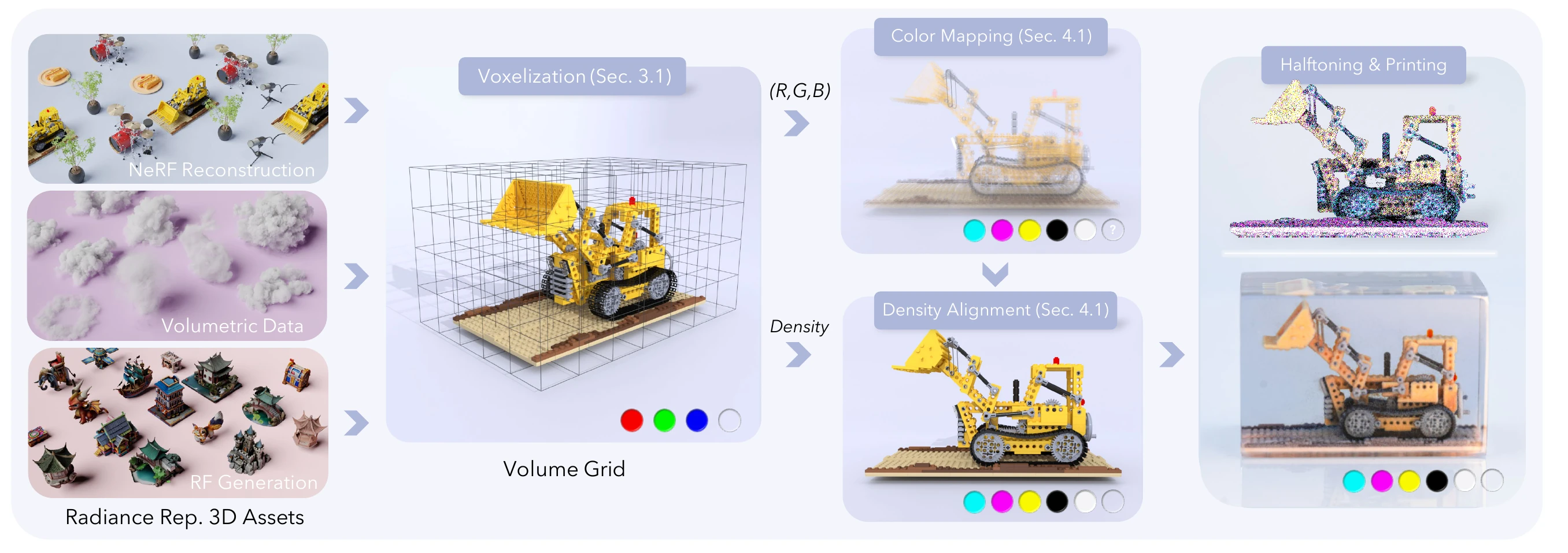
The pipeline transforms radiance representations into material-centric representations using Volumetric Printing Primitives. VPPs form a pre-print volume on a uniform grid; color mapping, density alignment, and stochastic halftoning then produce discrete pigment labels for direct 3D printing.
Volumetric Printing Primitives
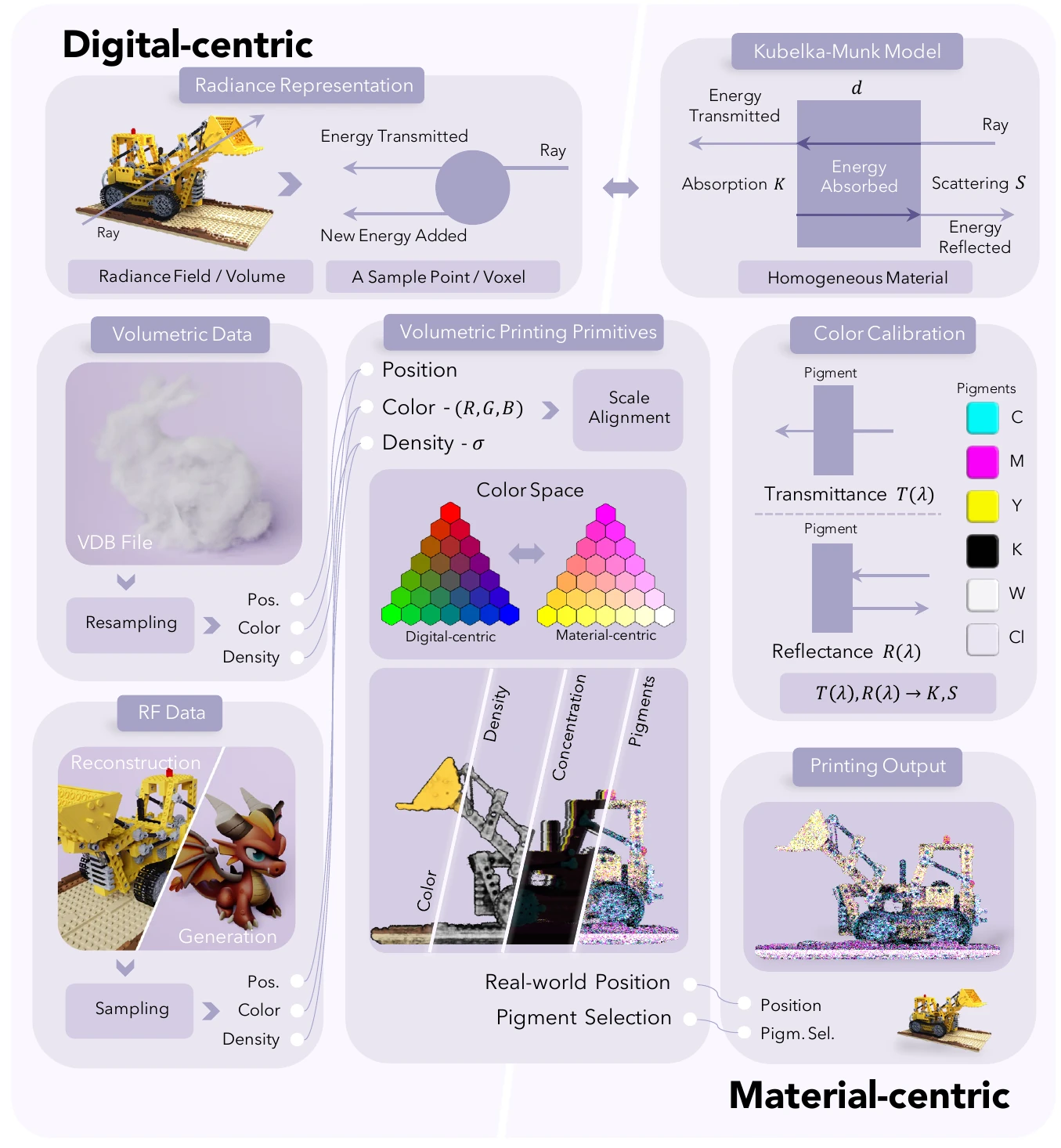
VPPs bridge radiance representations and physical printing. The Kubelka-Munk model and spectrophotometric measurements characterize the reflectance and transmittance of printing materials, enabling color calibration and efficient conversion from RGB and density values to pigment concentrations.
Material Mapping
For each voxel, a pre-computed color lookup table determines concentrations of cyan, magenta, yellow, black, and white pigments. Density alignment adjusts the printing density before stochastic halftoning generates the print-ready pigment distribution.
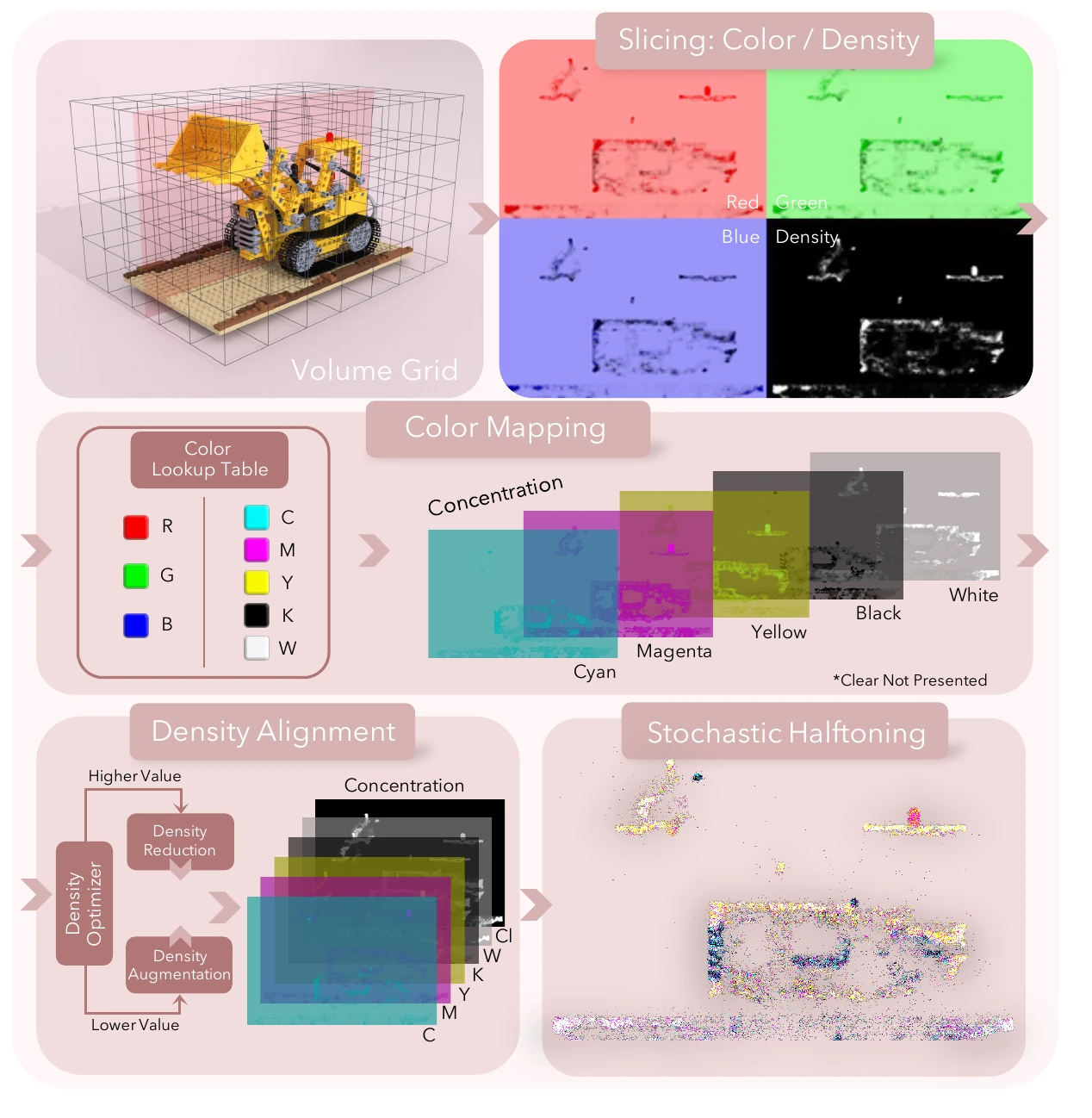
Final Prints
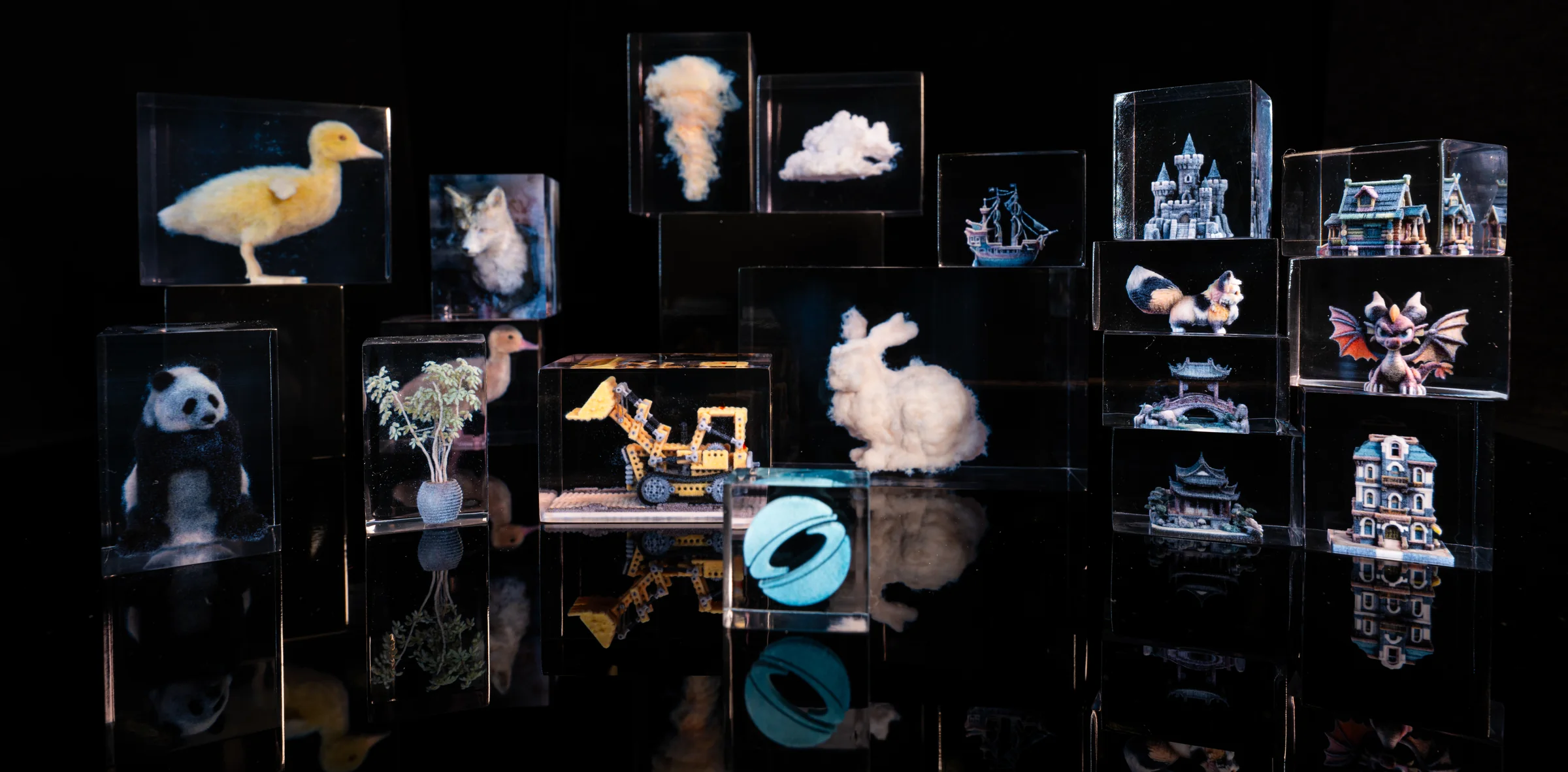
The final paper presents physical prints from InstantNGP radiance reconstructions, artist-made OpenVDB assets, and TRELLIS-generated radiance models. Across these sources, the results preserve fine volumetric detail, translucency, color, and spatial structure in physical form.
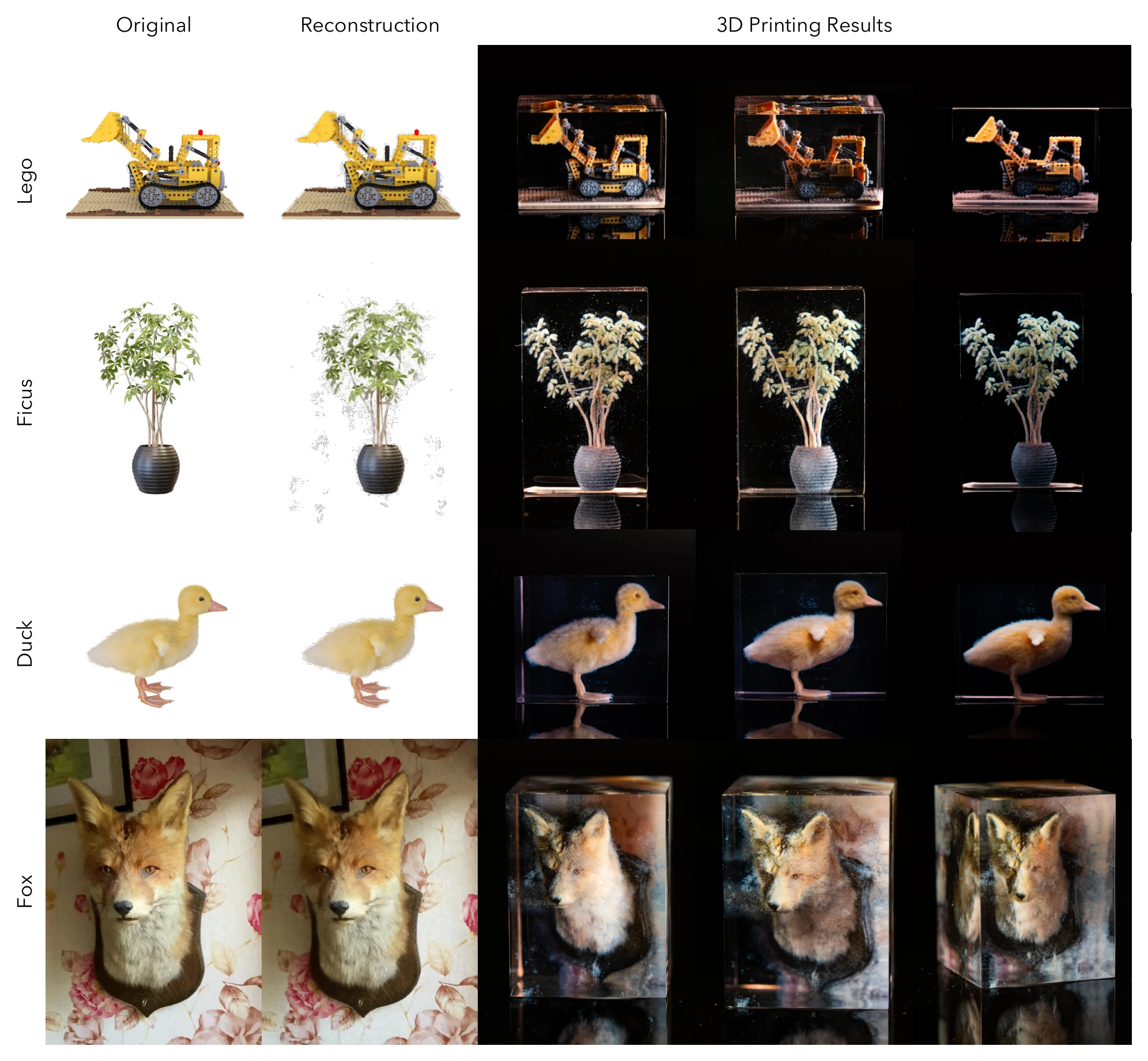
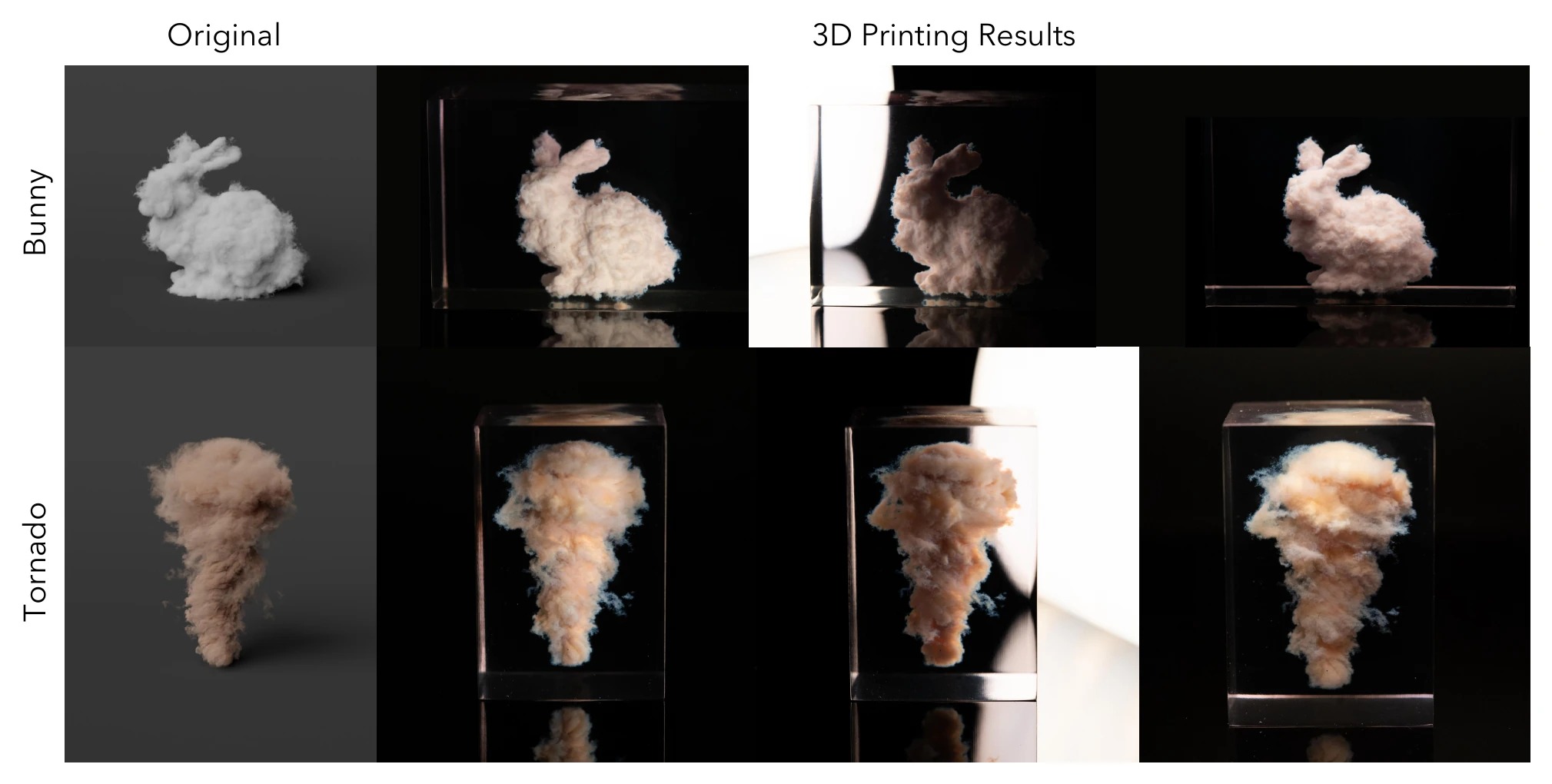
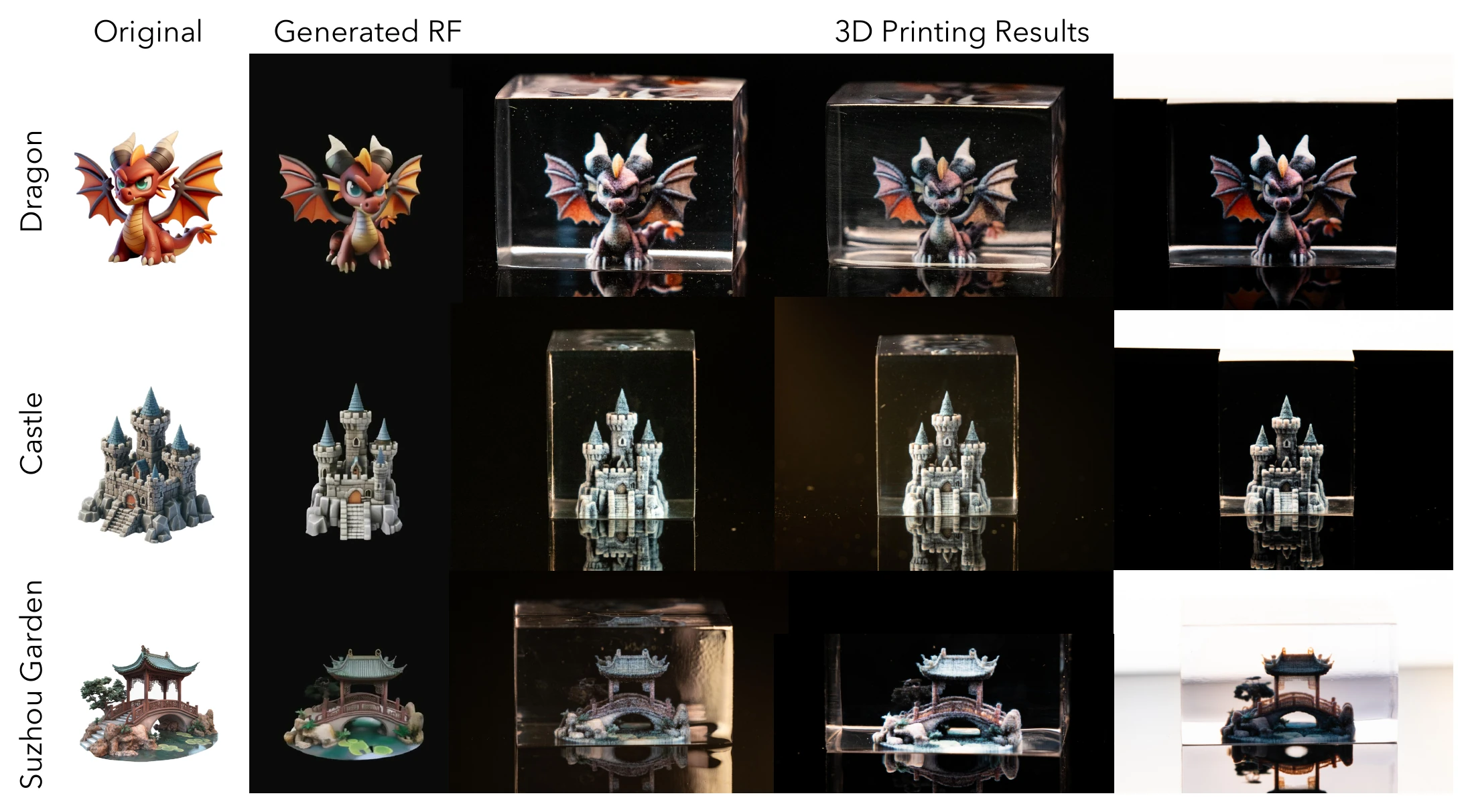
Evaluation
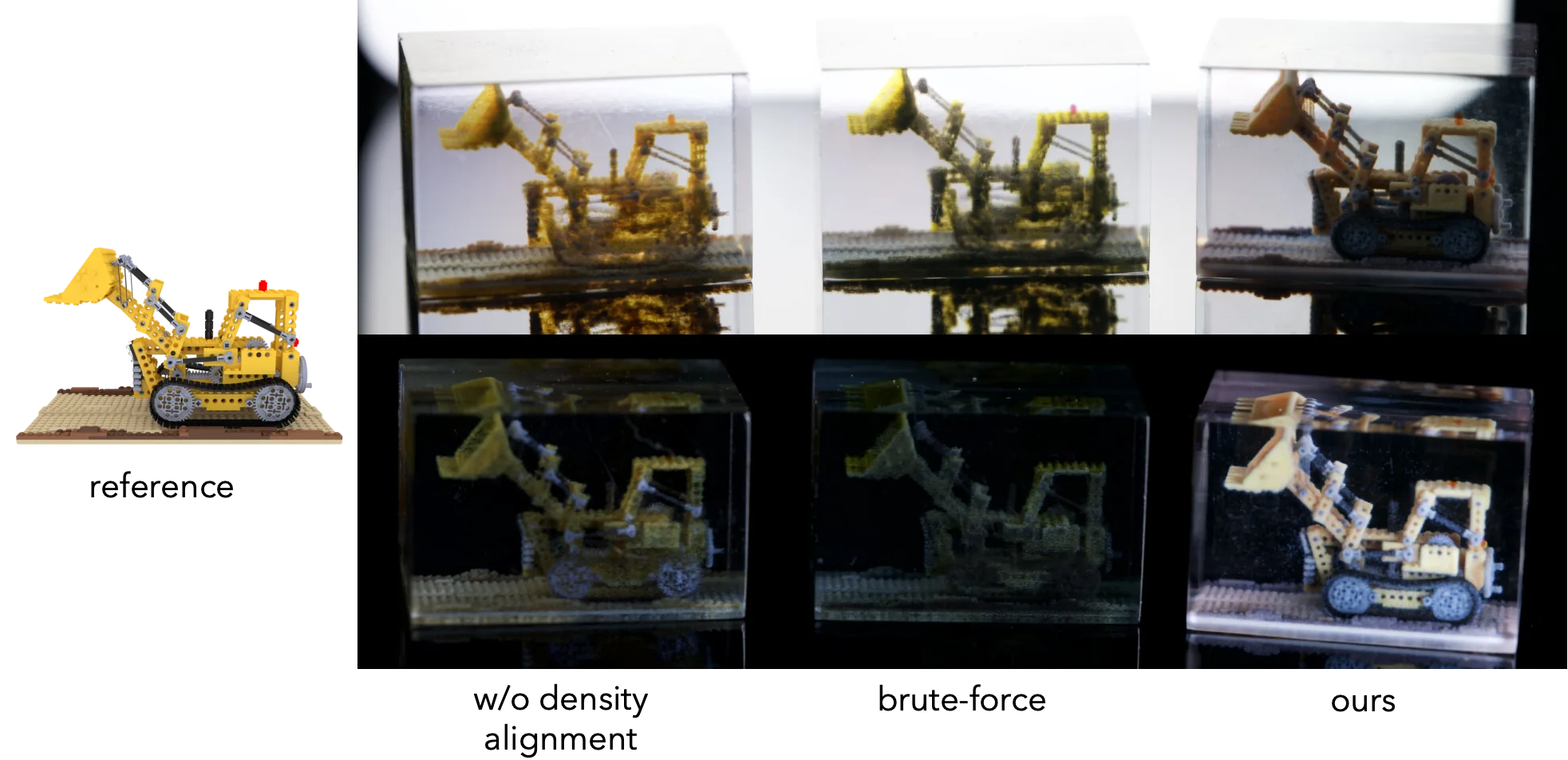
The ablation study compares digital objects with their printed results. Density alignment produces more accurate opacity while retaining fine control over texture and color gradients.